

Are You Building a Career or Creating a Legacy?
- In the Health Account, we explored energy.
- In the Wealth Account, we explored resources.
- In the Relationship Account, we explored connection.
- In the Self Account, we explored identity.
The Professional Account asks a different question:
How do I express who I am in the world?
Most people spend nearly half their waking lives working.
Yet very few pause to ask:
“Am I merely earning a living, or am I creating a legacy?”
Let me share the story of Arjun. But before we go into the story
Let me clarify something.
You may be a business owner, entrepreneur, manager, team leader, freelancer or even a salaried professional.
The Professional Account applies equally to all.
After all, some of the world’s most successful CEOs are salaried employees. Aren’t they? What distinguishes exceptional professionals is not whether they own the business. It is whether they think like owners. They create value. They solve problems. They measure results. They take responsibility for outcomes.
The story of Arjun is about business, but the lessons apply to anyone who wishes to build a meaningful professional life. Including a Salaried professional.
The Shortcut
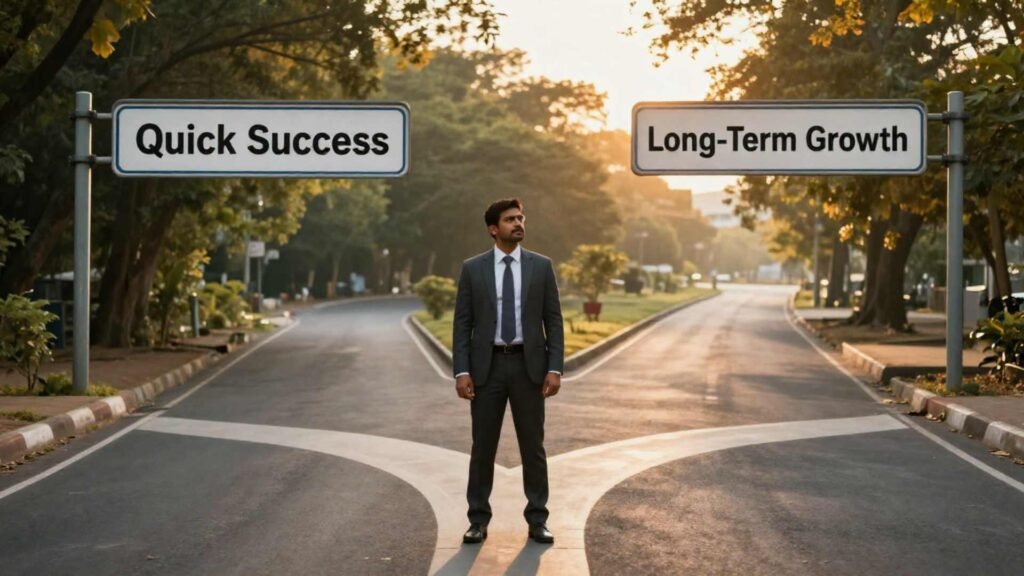
At 35, Arjun believed he understood success.
He owned a growing manufacturing business. The company was stable. Customers knew him. His team respected him. Things looked promising. Yet inside, he was restless.
Every month felt like a race. More sales. More customers. More competition. More expenses. No matter how much progress he made, it never felt enough. Like many ambitious entrepreneurs, he was always looking for the next breakthrough.
One afternoon, a broker walked into his office with what appeared to be an excellent opportunity. A simple arrangement. A shortcut. A manipulation. A adjustment. A way to improve profits quickly. Nothing looked illegal. Nothing appeared dangerous. In fact, many people in the industry were already doing it.
For several days, Arjun couldn’t stop thinking about the proposal.
The numbers looked attractive. Rewards looked immediate. Risks seemed manageable.
The more he thought about it, the more reasonable it appeared.
Finally, he decided to discuss the opportunity with an elderly businessman he deeply respected.

A man known not only for his success but also for his integrity.
After patiently listening, the old man asked him a few simple questions.
“Arjun, do you sleep peacefully at night?”
“Yes.”
“Do you have a roof over your head?”
“Yes.”
“Do you have enough to live comfortably?”
“Yes.”
The mentor smiled.
“Then tell me, what exactly are you trying to build?”
“A successful business,” Arjun replied confidently.
The old man shook his head.
“No.” “You are trying to build income.”
The answer surprised him.
The mentor continued.
“Ten years from now, what do you want people to remember?”
“The money you made?” “The deals you closed?” “The shortcuts you took?”
Or…
“The problems you solved?” “The value you created?” “The difference you made?”
The room became silent.
Then came the businessman’s sentence that would shape the rest of Arjun’s professional life.
“ I never go to the market to sell products. I go to solve problems.”
That evening, Arjun cancelled the deal.
At that moment, little did he realise that this one decision had changed the direction of his life.
He stopped chasing transactions. He started building relationships.
The Long Road : A Road Less Travelled
The years that followed were far from glamorous.
While competitors focused on closing deals, Arjun focused on understanding customers.

He visited them regularly. Sometimes there was business. Many times there wasn’t. Yet he continued showing up.
- Listening.
- Learning.
- Observing.
- Understanding.
Friends questioned his approach.
“Why waste so much time?” “Business is about selling.” “You’re becoming too emotional.” At times, even Arjun doubted himself.
The results were slow. Painfully slow.
Then something unexpected happened. A customer referred him to another customer. That customer introduced him to someone else. Soon, opportunities started arriving without him having to chase them.
One evening, while reviewing his diary, Arjun noticed a pattern.
The majority of his best business opportunities had come through relationships.
Not advertising. Not discounts. Not aggressive selling.
Relationships.
For the first time, he understood something profound.
Relationships were not merely a people skill. They were a business asset.
Without realising it, he had started building Relational Capital.
Becoming Valuable

Trust opened doors.
But Arjun soon realised something important.
Relationships could get him into the room. Knowledge would determine whether he stayed there.
He knew his products. But he didn’t understand his customers, their products, their issues, their problems deeply enough.
So he started learning. Books. Industry journals. Courses. Factory visits. Mentors. Conversations. Questions. Lots of questions.
While others relaxed after work, Arjun spent hours learning about his customers, which was also improving him.
Over time, customers began noticing the difference. He was no longer just another supplier. He understood their challenges. He understood their business. He understood their problems. People naturally trust those who understand them.
Years later, Arjun would realise that this period of his life was about building Educational Capital.
He realised it as the second foundation of long-term professional success.
The Crisis That Changed Everything

A few years later, Arjun’s business was doing reasonably well.
Customers trusted him. The team was stable. Revenue was growing. Life seemed to be moving in the right direction.
Then came the shock.
One morning, he received a message from one of his most important business associates requesting an urgent meeting.
The meeting began formally. But within a few minutes, the conversation took an unexpected turn.
“Arjun, we are concerned about your performance.”
The words hit him like a punch to the stomach. Performance? What performance issue?
For years, he had worked tirelessly, built relationships, solved problems, and travelled extensively, investing time, effort, and energy in growing the business.
How could anyone question his performance?
The meeting ended politely.
But Arjun was shaken.
For the first time in years, he felt helpless.
Driving back to his office, a thousand thoughts raced through his mind. For several days, he replayed the conversation repeatedly. At first, he was angry. Then disappointed. Then frustrated.
Eventually, he asked himself a question that would change his professional life forever.
“What if they are not questioning my effort?”
“What if they are questioning my results?”
That thought stopped him.
Until that moment, Arjun had focused on activity.
Customer visits. Meetings. Discussions. Travelling. Problem solving.
But activity and results are not the same thing.
For the first time in his life, he began examining the facts.
He pulled out old files. Sales records. Customer lists. Market data. Performance reports. Historical figures. For days, he sat in his office studying numbers.
Interestingly, a pattern began to emerge.

The picture was completely different from what appeared on the surface.
As he continued analysing the data, something fascinating happened.
The facts started telling a story. A story that opinions had completely missed.
Arjun condensed everything onto a single sheet of paper.
On one side were the numbers. On the other side were the facts behind those numbers. No emotions. No arguments. No excuses. Just facts.
A few days later, he walked into the review meeting carrying that single sheet.
The discussion started. Questions were asked. Concerns were raised.
Arjun placed the document on the table patiently.
The room became silent. People studied the paper. Questions slowed down. Expressions changed.
The facts spoke for themselves. Facts cannot be disputed.
The meeting ended very differently from how it had begun.
Not only was the relationship preserved, but the respect for Arjun increased significantly.
As he walked out of the meeting, Arjun realised something profound.
For years, he had believed that hard work creates success.
Now he understood a deeper truth.
Results create influence.
And results must be measurable.
That evening, he wrote a sentence in his diary. What gets measured gets improved.
The Discovery of Measurement
Most people measure effort. Very few measure outcomes. Most people measure activity. Very few measure impact.
Arjun became obsessed with understanding the difference.
He started measuring everything. Customer retention. Customer referrals. Revenue growth. Cash flow. Productivity. Learning. Team development. Project outcomes. Professional effectiveness.
Over time, he noticed an unmistakable pattern.
Whatever he measured improved. Whatever he ignored deteriorated.
Measurement created awareness. Awareness created improvement. Improvement created results. Results created confidence. Confidence created growth.
The cycle repeated itself again and again.
Years later, this understanding would become one of the foundations of a methodology he developed to help people move from activity to measurable impact.
The Four Capitals
One evening, while reflecting on his journey, Arjun noticed another pattern.
His biggest opportunities came through relationships. His credibility came through learning. His referrals came through reputation.
Only then did the money arrive.
For the first time, he understood the true sequence:
- Relational Capital.
- Educational Capital.
- Reputational Capital.
- Financial Capital.
Arjun smiled as he looked back.

For years, he had chased Financial Capital.
Ironically, it arrived only after he had spent years building the other three.
It was now clear that Financial Capital is the outcome. Not the starting point.
This realisation transformed how he approached business and life.
Excellence Is a Habit
As his career progressed, Arjun was reading a book, “Good to Great” by Jim Collins. In the book, there was a Chapter which said: “Good is the enemy of Great”. Arjun discovered another danger.
Arjun realised that success had made him comfortable and stagnant.
One day, he lost an important customer. Not because of poor quality. Not because of poor service.
But because a competitor had improved faster.
The loss hurt badly; however, it taught him an invaluable lesson.
Excellence is not a destination. It is a discipline.
Suddenly, he was connected to a training program he had attended a month ago on Personal Excellence and its six steps. From that day onward, he committed himself to applying them:
- Loving change
- Taking calculated risks
- Treating mistakes as learning opportunities
- Learning continuously
- Setting meaningful goals
- Seeking criticism
He especially loved the sixth step of seeking criticism. He started taking feedback, especially negative feedback. It took some time, as he had to create an environment in which he began to receive authentic feedback. And it is free. He also realised that “Champions have criticism for breakfast”
Criticism, if taken correctly, reveals blind spots, the exact opportunity for growth.
The 80:20 Discovery

As the business grew, Arjun found himself working harder than ever.
Long hours. More meetings. More travel. More activity.
Yet the results were not growing proportionately.
One evening, he reviewed his customers, products and revenue streams.
He noticed a new pattern.
A small percentage of customers generated the majority of his business. A small percentage of activities created the majority of results. A small percentage of mistakes caused the majority of problems.
For the first time, he understood the power of the Pareto Principle. The 80:20 Rule.
Twenty per cent of effort often creates eighty per cent of the results.
From that day on, he stopped trying to do more things. He started focusing on the right things.
Walk the Talk

As his responsibilities increased, Arjun found himself leading larger teams.
Initially, he tried telling people what they should do. Nothing changed. Then he realised something important.
People were watching him far more than they were listening to him.
If he arrived late, people arrived late.
If he avoided difficult conversations, people avoided difficult conversations.
If he made excuses, others made excuses.
Culture was simply leadership in action.
From that day, he stopped trying to influence people through words.
He started influencing them through example. Walking the Talk
People hear what you say. But they believe what you do.
The Birth of VIP
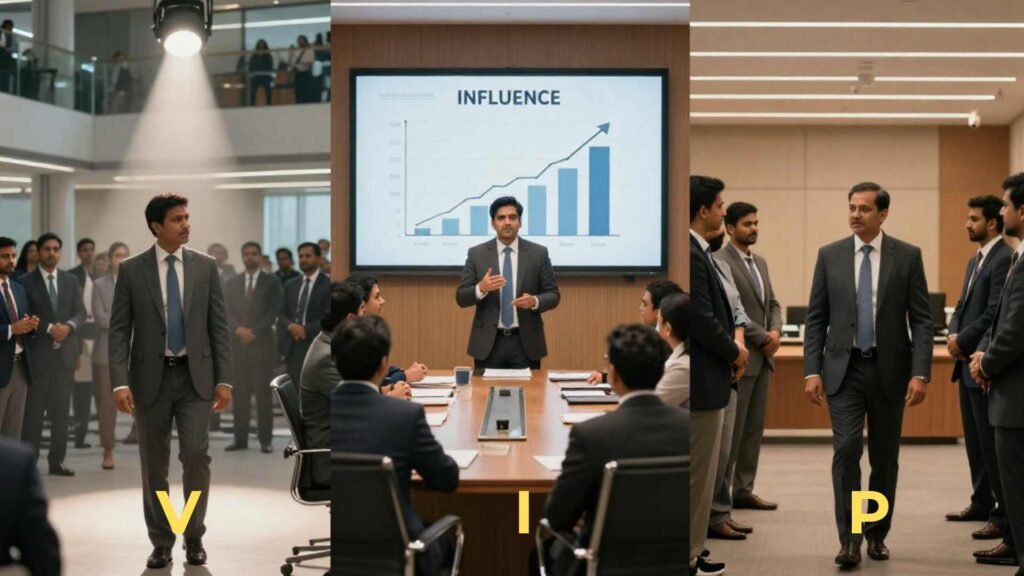
Years later, while reviewing his journey, Arjun noticed something fascinating.
Whenever he created measurable results, three things happened naturally.
People noticed him. People trusted him. People remembered him.
Visibility. Influence. Presence.
Suddenly, the pattern became obvious.
Visibility was not created through self-promotion. It was created through contributions.
Influence was not created through authority. It was created through trust.
Presence was not created through titles. It was created through impact.
For the first time, Arjun realised that V. I. P. was not something that happened to successful people.
It was something that could be intentionally created.
Visibility, Influence, and Presence could all be measured.
And whatever could be measured could be improved.
He realised that he could intentionally develop himself. Design his life and success.
Business Acumen: Seeing the Bigger Picture
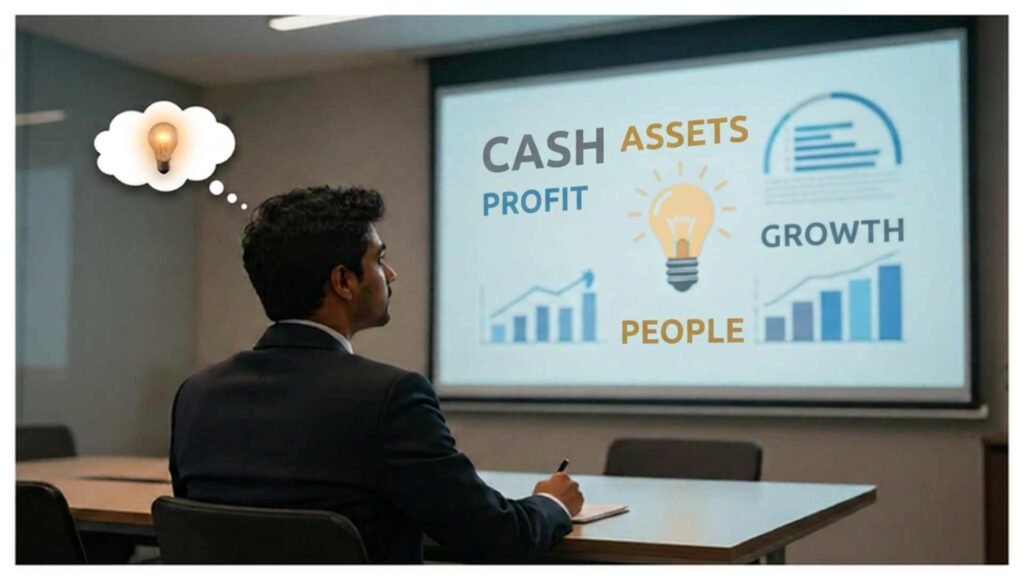
A few years after the performance crisis, Arjun believed he finally understood business.
Sales were growing. Customers were happy. Cash flow had improved. Life was good.
Or so he thought.
One afternoon, while reviewing the monthly numbers, he noticed something strange.
Sales had increased. Yet there was very little cash in the bank. The business was working harder than ever. But somehow it never seemed to have enough money.
Confused, he discussed the issue with one of his mentors.
The mentor listened quietly and then asked a simple question.
“Arjun, if sales are increasing, why is cash decreasing?”
Arjun had no answer.
The mentor pulled out three documents and placed them on the table.
1. The Balance Sheet. 2. The Profit & Loss Statement. 3. The Cash Flow Statement.
“Your business is speaking to you,” he said. “The question is, can you understand its language?”
For the next several months, Arjun immersed himself in understanding how businesses actually worked.
He discovered that sales and profits were not the same thing.
Profits and cash were not the same thing.
Assets could create wealth. Or they could quietly drain resources.
Growth could strengthen a business. Or destroy it.
The deeper he looked, the more he realised that successful leaders saw things differently.
They didn’t just see today’s sales.
They saw patterns. Connections. Consequences.
They saw the larger picture.
Then came another insight.
Every business challenge ultimately touched five areas.
- Cash.
- Profit.
- Assets.
- Growth.
- And People.
The first four determined the health of the business. But the fifth determined whether the other four could ever reach their full potential.
One day, while walking through his factory, Arjun paused and looked around.
Machines were running. Orders were being processed. Customers were being served.
None of it would happen without people.
At that moment he realised something profound.
People were not a support function.
People were the business.
When people grew, the business grew.
When people stagnate, the business eventually stagnates.
As he walked through the factory that day, Arjun realised something else. Every machine, every process, every customer relationship ultimately depended on people.
Perhaps that was why the most successful leaders he had met were not product masters.
They were masters of people.
That lesson changed how he led for the rest of his life.
Career, Profession and Legacy
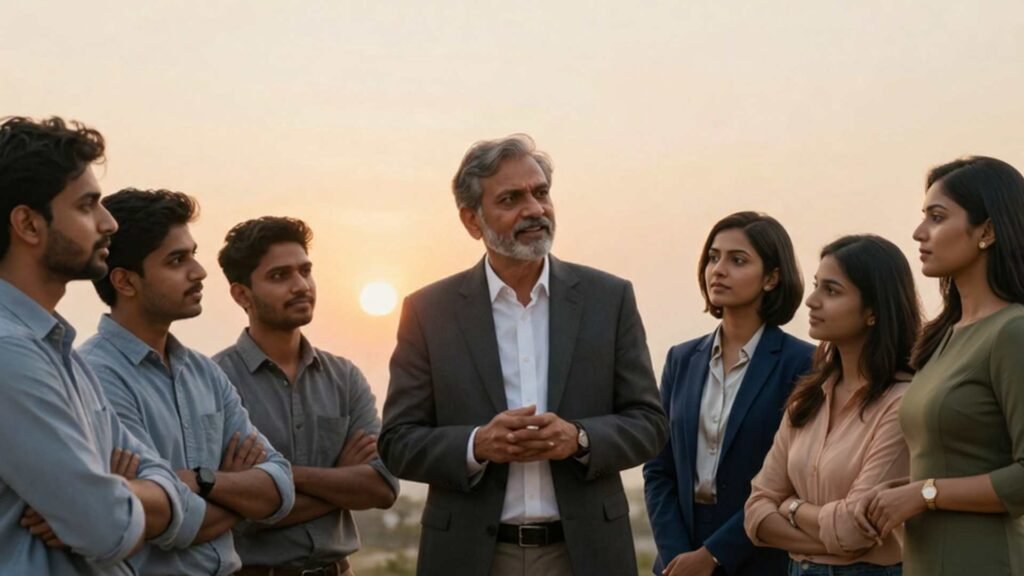
Many years later, a young entrepreneur asked Arjun a simple question.
“Sir, what is the secret of success?”
Arjun smiled.
For a moment he thought about the mentors, customers, employees, failures, mistakes and lessons that had shaped his journey.
Then he replied:
“When I was younger, I chased money.”
“Then I chased success.”
“Eventually I discovered something more important.”
- “Create value.”
- “Measure results.”
- “Build people.”
- “Everything else follows.”
A career earns a living. A profession creates value. A legacy creates impact long after you are gone.
And that is the true purpose of the Professional Account.
Not merely to earn more. But to become more. Not merely to build a business. But to build a life of contribution, influence and meaning.
Whether you run your own business or work for someone else’s, the principles remain the same.
The marketplace rewards value creation. Organisations reward results. People trust credibility. Influence follows contribution.
A CEO may be a salaried employee.
A business owner may own a company.
Yet both ultimately succeed or fail based on the same foundations:
- Relationships.
- Learning.
- Reputation.
- Measurement.
- Results.
- And people.
The Professional Account is therefore not about what you do. It is about how you think.
That mindset is what separates those who merely hold positions from those who create lasting impact.
Reflection Questions

- Am I chasing money, success or significance?
- What value do I consistently create for others?
- Which of the Four Capitals needs the most attention in my life today?
- What am I measuring regularly?
- Am I focused on activity or results?
- What is my 20% that creates 80% of my outcomes?
- Where am I failing to Walk the Talk?
- What legacy am I building through my work?
Personal Action Plan (PAP)

Basic Level
- Identify one professional goal for the next 90 days.
- Track one measurable result every week.
- Strengthen one professional relationship.
Intermediate Level
- Create a personal dashboard with five measurable indicators.
- Seek feedback from three people.
- Identify your top 20% value-creating activities.
Advanced Level
- Build a Visibility, Influence and Presence growth plan.
- Mentor at least one person.
- Measure both tangible and intangible ROI from your efforts.
ROI (Return on Investment)

Tangible ROI
- Revenue growth
- Increased productivity
- Better customer retention
- New opportunities generated
- Multiple income streams created
Intangible ROI
- Increased confidence
- Stronger professional reputation
- Better relationships
- Greater influence
- Improved leadership presence
- Clearer sense of purpose
Final Thought
Your Professional Account is not measured by your designation.
- It is measured by the value you create, the people you impact, the results you produce, and the legacy you leave behind.
- Create value.
- Measure results.
- Build people.
Everything else follows.