
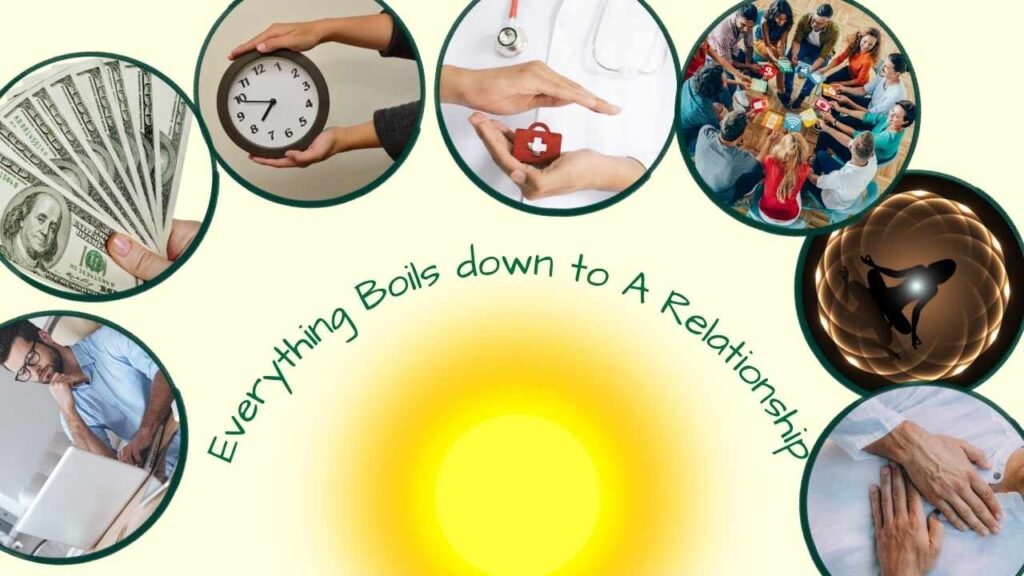
Why Everything in Life Boils Down to a Relationship
Have you ever met someone who seems to have everything?
A successful career. A good income. A beautiful home. A loving family.
Yet beneath the surface, something feels incomplete.

At 42, Amit was that person.
He was a Senior Vice President in a growing company. His career was thriving. His financial situation was comfortable. From the outside, life looked perfect.
Yet his wife often complained that he was physically present but mentally absent. His mother said he never had time for her. His father and he barely spoke beyond practical matters. His health was showing signs of neglect. And despite being surrounded by people, he often felt alone.
Then came two wake-up calls.
The first was his annual 360-degree feedback report.

Among all the positive comments, one sentence stood out:
“Difficult to connect with.”
The second came a few weeks later at his son’s school.
A note written anonymously by a student was read aloud:
“I don’t want a successful father. I want a father who has time for me.”
On the drive home, Amit asked his son if he had written it.
His son looked out the window and quietly replied:
“Dad, I know you’re doing all this for us. But I don’t think you know me anymore.“
That night, Amit couldn’t sleep.
For the first time, he saw a pattern.
The issue wasn’t at work, wasn’t at home, wasn’t other people.
The issue was relationships.
And that is when he began to understand a powerful truth:
Everything in Life Boils Down to a Relationship.
The Hidden Problem: We Try to Fix People Instead of Understanding Relationships
Most people spend their lives trying to fix other people. We want our spouse to change, our children to behave differently, our boss to understand us, our parents to think differently, our team to perform better. The problem is not that people need fixing. The problem is that we often fail to understand the relationships behind the behaviour.
A mentor once asked Amit a simple question:
“How is your relationship with time?” “With money?” “With health?” Finally, “With yourself?”
The questions seemed unrelated at first.
Then Amit realised something profound.
Life is not a collection of events. Life is a collection of relationships.
Relationships with people, with money, with health, with work, with time, with yourself.
Everything boils down to a relationship.
The Balance Sheet of Life Reframe
In the Balance Sheet of Life, every account is ultimately a relationship account.
Your Health Account is determined by your relationship with health.
Your Wealth Account is determined by your relationship with money.
Your Professional Account is determined by your relationship with work.
Your Social Account is determined by your relationship with people.
Your Spiritual Account is influenced by your relationship with yourself and something larger than yourself.
When one relationship weakens, the impact often spreads across multiple areas of life.
A poor relationship with health affects energy.
A poor relationship with money creates stress.
A poor relationship with yourself influences every other relationship.
The Relationship Account is not just another account.
It is the invisible thread connecting all seven accounts in the Balance Sheet of Life.
LSU Golden Nugget #1: What You Sow Is What You Reap… Multiplied
As Amit reflected on his relationship with his son, another realisation emerged.
For years, he had invested time in customers.
Time in presentations, in targets, in meetings, all or the customer. However, very little time in his son.
Now he was harvesting the result. And like every harvest, it had returned multiplied.
His son wasn’t rejecting him. His son was responding to him.
Relationships are like farms. The harvest always reflects the seeds.
If you sow trust, you receive trust multiplied.
If you sow neglect, you receive neglect multiplied.
If you sow respect, you receive respect multiplied.
LSU Golden Nugget #2: The Event Is a Fact. The Meaning Is an Opinion.
One afternoon, Amit found himself discussing his father.
For years, he believed his father loved his brother more. He could recall dozens of incidents that seemed to prove it. One memory stood out.
His father leaving the office to buy a birthday gift for his brother. The memory still hurt.
Then his mentor asked a simple question: “What is good about what happened?”
The question irritated him. Yet it stayed with him. Days later, something shifted.
He realised that many of the moments he had interpreted as rejection had actually made him stronger, more resilient, more independent, and more determined.
For the first time, he saw his father differently.
Not as someone who loved him less. But as someone who loved him differently.
That day, he learned a lesson that changed many relationships in his life:

The event is a fact. The meaning we attach to it is an opinion.
LSU Golden Nugget #3: Look Beneath the Anger
Despite this breakthrough, Amit still felt anger whenever he thought about certain incidents.
During a personal development program, he participated in an exercise where he was asked to express everything he had never said to his father. Initially, there was irritation. Then anger. Years of withheld emotions, he was almost shouting.
Then something unexpected happened. As the anger emptied itself, another emotion emerged.
Love.

The very person he believed he hated was the person he loved most deeply.
For the first time, he realised:
What we often call hate is wounded love. The deeper the attachment, the deeper the hurt. The deeper the hurt, the stronger the anger appears.
But beneath it all, love often remains untouched.
LSU Golden Nugget #4: Clean Up the Source
Amit later reflected on his relationships with both his parents.
Indian wisdom teaches us:
Matru Devo Bhava. Pitru Devo Bhava.
Treat your mother and father as divine. Our parents are our source.

Think of a river.
If the source is polluted, the effects are seen downstream.
The same happens in relationships.
Many unresolved patterns in our lives can often be traced back to unresolved conversations with our mother or father.
Healing often begins not by changing them but by changing our understanding of them.
LSU Golden Nugget #5: Meaningful Interactions Build Trust
The mentor asked Amit:
“When was the last time you had a meaningful interaction with your son?”
Not discussing studies. Not giving advice. Not solving problems.
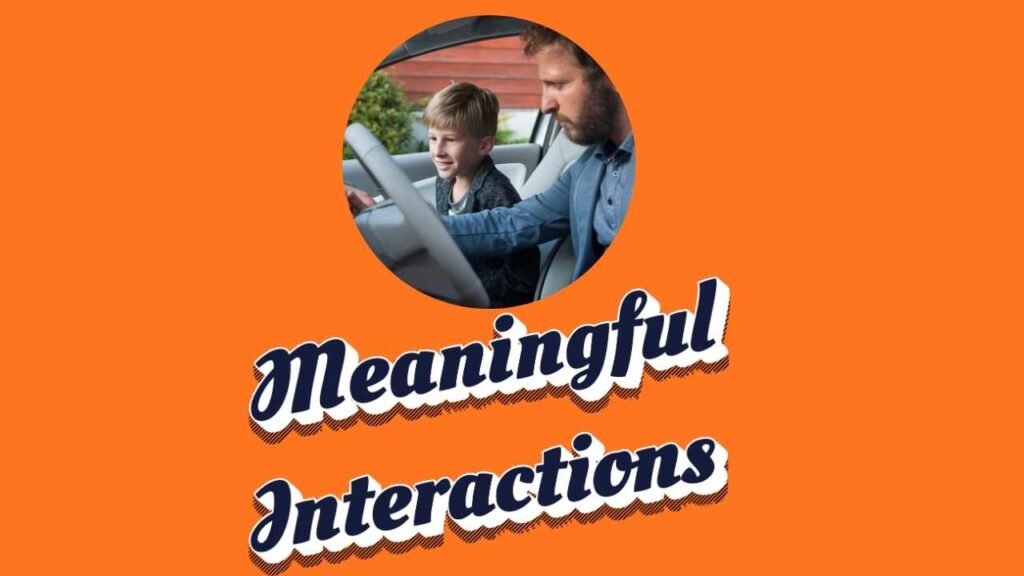
A meaningful interaction.
He explained:
“When people fall in love, meaningful interactions happen naturally.” They listen. They become curious. They remember details. Trust grows. Connection deepens. Relationships flourish.
Over time, meaningful interactions stop. The relationship survives. The connection dies.
The mentor gave Amit a simple assignment: Schedule a 30-minute meeting with your son.
No advice. No lectures. No judgement. No problem-solving. Just curiosity and listening.
Slowly, trust returned.
Trust is rebuilt one meaningful interaction at a time.
LSU Golden Nugget #6: Your First Relationship is with yourself.
As Amit’s relationships improved, another question quietly emerged.
Who am I? Without my designation. Without my salary. Without my achievements. Without the approval of others. For years, Amit had measured himself through his results. Promotions. Income. Recognition. Status. Every achievement gave him satisfaction only for a short while before he started chasing the next one.
One evening, he realised something important.
The relationship he had neglected the most was not with his wife, Not with his son, Not with his parents.

It was with himself.
He had spent years trying to understand other people while barely understanding himself.
Years of trying to gain acceptance while struggling to accept himself.
Years of trying to improve relationships while ignoring the person responsible for all of them.
The person in the mirror.
His mentor had once told him:
“Your first relationship is with yourself. Every other relationship is merely a reflection of that one.”
For the first time, Amit understood.
When he judged himself harshly, he judged others harshly.
When he became more accepting of himself, he became more accepting of others.
When he improved his relationship with himself, every other relationship in his life began to improve.
Because every relationship begins with the relationship you have with yourself.
The V.I.P. Impact Cycle Connection
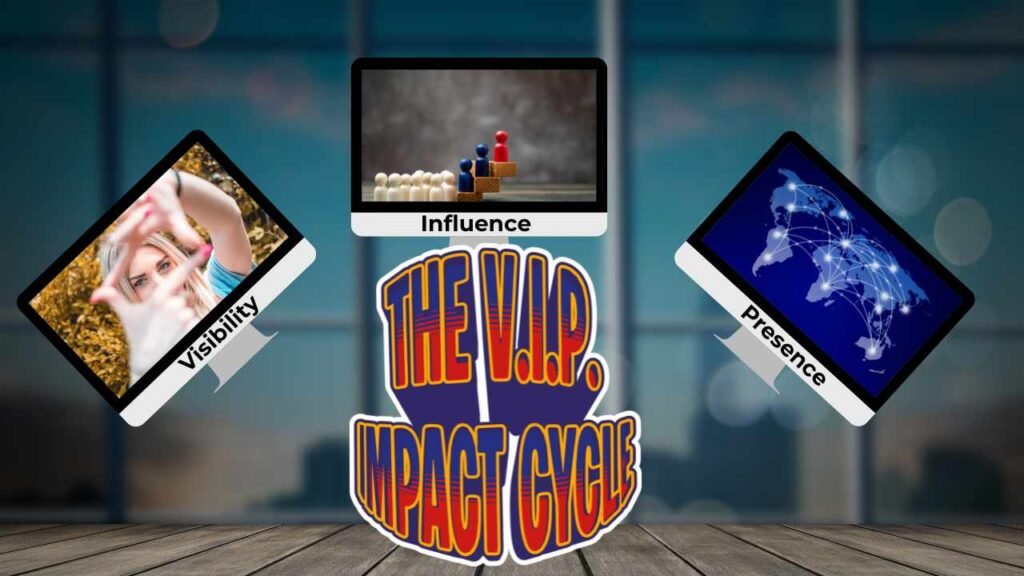
The V.I.P. Impact Cycle teaches us that lasting results begin with awareness.
Visibility
Amit finally saw the patterns he had ignored.
Influence
His interpretations were influencing his decisions, emotions, and relationships.
Presence
His relationships reflected the person he had become.
When his perceptions changed, his actions changed.
When his actions changed, his results changed.
That is The V.I.P. Impact Cycle in action.
Reflection Questions
Take a few moments to reflect honestly on the five questions below.
There are no right or wrong answers. The value lies in your honesty.
- Who is the one person with whom you need a meaningful interaction?
- What opinion are you treating as a fact?
- Who do you need to forgive?
- What relationship in your life needs healing?
- How is your relationship with yourself?
Your Personal Action Plan (PAP)

Awareness creates insight. Action creates impact.
What is ONE action you will take in the next 7 days?
My Action:
By When:
Expected Benefit:
Measure Your ROI
At the end of the week, ask yourself:
What tangible or intangible return did I receive from taking this action?
Tangible ROI Examples
- Better communication
- Improved teamwork
- Better decisions
- Increased productivity
- Stronger customer relationships
Intangible ROI Examples
- Greater confidence
- Reduced stress
- More clarity
- Improved discipline
- Better decision-making
- Greater peace of mind
Final Reflection
The Relationship Account is not one of the seven accounts in the Balance Sheet of Life.
It is the thread that connects them all.
Profession.
Social.
Self.
Spiritual.
Relationships.
The quality of your life is ultimately determined by the quality of your relationships.
And every relationship begins with one question:
How is your relationship with yourself?
Beautifully expressed.
Equally insightful article with an understanding of correlation a person has with surroundings in the form of relationship.
Gratitude LSU world for sharing this with everyone.
Thank You Falguni for your kind, appreciative and inspiring words. Keep me motivated.
A thought provoking article. Many times our relationships with others are reactive than proactive. I found the answer of this in this blog – relationship with oneself! If I am comfortable with me and I accept me as I am, I see relationships with others without any bias. Amit initially must have had material bias – means see success only as material success. It could be due to deprivation, comparing himself with others. That must have brought in anger against his father. So once he started accepting himself and getting comfortable with himself, things changed. Thank you Rajendra for this excellent article and the LSU.
Thank you Ajit. Now apply what you ahve learnt and grow. Keep me motivated by sharing your results.