
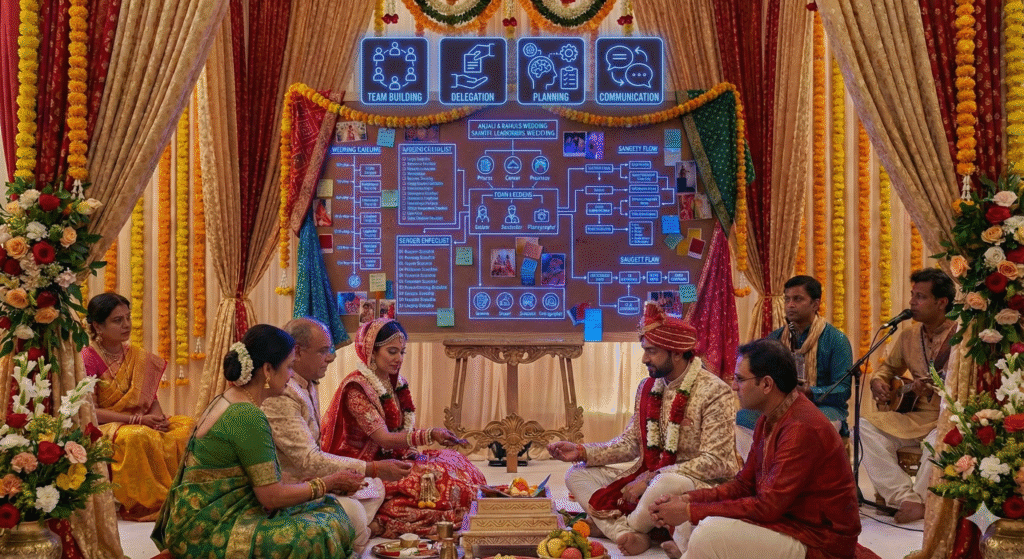
How LSU Transformed a Wedding into a Masterclass in Planning and Leadership
The times were festive, as my son’s marriage had been fixed. There was happiness and joy everywhere; however, deep within me, I felt a little anxious. As you are aware, Indian weddings are elaborate, expensive, and mentally and physically taxing. The only thing that was on my side was time—the wedding date was a good six months in advance.
This became the perfect opportunity for my LSU Golden Nuggets to find expression. My company had invested in me by enrolling me in LSU—such an awesome development initiative by Rajendra Muthye. As soon as the wedding planning began, the sessions that came to my mind were: Goal Setting and Priorities, Time Management, Seven Steps of Effective Planning, Delegation, Customer Obsession & Service, Negotiations, Listening, Who Motivates the Motivator, and Building a Great Team in the pursuit of excellence.
The LSU Golden Nuggets That Powered the Planning
The Golden Nuggets used throughout this journey were:
- All Seven Steps of Planning
- Start with the End in Mind
- Prioritisation of Tasks
- Reframing Self-Talk
- What Is In It for Them
- Who to Delegate and What to Delegate
- Focus on Customer Experience and Make Them Feel Valued
- The Art of Gentle Confrontation
- Empowerment of Team Members
- Delegate Results, Not Tasks
- Communication Clarity
These Nuggets became the backbone of the entire event.
Starting with the End in Mind: The Core Planning Philosophy
Starting with the End in Mind was the first step. My core team consisted of five people: my wife, three office co-workers, and myself. This was our small but powerful team.
The long-term goal was clear—to make the wedding an unforgettable experience for everyone attending. The second critical component was the budget. My wife and I discussed this, taking guidance from a few elders in the family, and finalised the estimated total cost. Once the goal and budget were set, we began the planning process.
Because my office team was already enrolled in the LSU conversations, the entire process became easier. We spoke the same language. Conflicts were managed effectively. Dominating relatives were gently confronted. With the long-term goal fixed, we aimed to complete all work one month before the wedding date—and interestingly, we managed to complete everything 15 days ahead of schedule.
Gathering the Facts: The Foundation of Effective Planning
For the plan to be successful, our team needed to gather facts:
- Number of relatives attending
- How many were outstation and how many were local
- List of halls in the vicinity
- Details of caterers and decorators
Since many of these came as part of the hall package, the burden of shortlisting them was reduced. Facts were important because they can be measured in time, distance, and form—and this made planning effective.
Delegation Based on Strengths: A Key LSU Principle
Delegation was done based on the strengths of each person involved. Every communication channel was routed through the person allotted to that task. That person had full authority to take appropriate decisions in the heat of the moment.
We implemented a strict rule—no questions asked by us, or by relatives, especially the dominating ones. This simple rule kept conflicts to a minimum and motivation at a high level.
A Meticulous Planning Framework That Stunned Everyone
The event was planned with absolute meticulousness using a proper flow chart. Every guest knew the flow—what was happening, when it was happening, and whom to contact if they needed anything.
We created detailed lists and structures:
- Outstation guest list
- Local guest list
- Hall booking
- Catering menu finalisation after tasting sessions
- Decoration planning
- Return gifts
- Hotel bookings for outstation relatives
- Pick-up and drop points for multiple destinations
- Airport and railway station pick-ups
- Contact numbers for immediate assistance
The level of detail stunned relatives. Even after tens of years, they still remember the experience of my son’s wedding—not just for the ceremonies but for the seamless execution in every aspect.
Challenges Did Come — But LSU Prepared Us for Them
The event went flawlessly—not because there were no challenges, but because LSU taught us how to handle them. In fact, there was a massive challenge that made us question whether the marriage would take place at all. But by God’s grace, everything went smoothly in the end.
We managed:
- Cleanliness
- Food quality and taste
- Food selection to ensure no one felt left out
- Communication with team members
- Warm yet firm communication with relatives when required
This blend of emotional balance, logical planning, and structured execution is what LSU builds within you.
LSU’s Impact on Personal Leadership and Team Excellence
This wedding became a real-life demonstration of how LSU transforms individuals into powerful leaders capable of handling complexity with grace and clarity. The Golden Nuggets seamlessly integrated into:
- Family leadership
- Event management
- Conflict resolution
- Decision-making under pressure
- People engagement
- Service mindset
This was not management. This was leadership.
This was not coordination. This was mastery.
Why LSU Works So Powerfully in Real Life
LSU provides:
- Structure
- Clarity
- Emotional intelligence
- Decision-making tools
- People management frameworks
- A mindset of excellence
It equips you to turn overwhelming situations into well-managed milestones. And this wedding became proof of that.
Internal Links
- Explore the V.I.P. Impact Cycle™ and how it strengthens your leadership:
www.lsuworld.com/vip-impact-cycle - Learn more about LSU’s Golden Nuggets and how they transform life challenges:
www.lsuworld.com/golden-nuggets
External Link: Learn more about effective planning philosophies:
https://www.mindtools.com/pages/article/newPPM_90.htm
Final Reflection: LSU Turns Life Events Into Leadership Classrooms
This entire wedding journey proved one thing—LSU is not just a learning program. It is a life program. It transforms simple events into masterclasses in planning, leadership, teamwork, and emotional intelligence.
LSU Gives You the Power to Turn Pressure Into Excellence
If LSU can transform a high-stress Indian wedding into a flawlessly executed, unforgettable experience, imagine what it can do for your personal and professional life.